
KYOCERA Document Solutions



Technology is advancing at an extraordinary speed. As organisations accelerate digital initiatives, Information Technology (IT) professionals face a dual challenge: enabling innovation while protecting their systems and users. Each year brings new shifts, from artificial intelligence (AI) governance requirements to the rise of hybrid cloud infrastructure and growing expectations around digital sustainability.
Understanding these developments is essential for businesses aiming to remain competitive and secure. This blog explores the trends shaping IT and how Kyocera’s comprehensive IT solutions empower teams to build resilience, streamline operations, and support long-term growth.
Trends shaping the future for IT professionals
A combination of technological advancements, regulatory pressure and heightened security risks is reshaping global IT environments. Below, we’ll explore these IT solutions.
Responsible AI
AI adoption continues to grow, reshaping how IT professionals design and maintain systems. With tools like ChatGPT, GitHub Copilot and other LLM assistants now embedded into everyday workflows, AI has moved from experimentation to necessity. Recent research shows 84% of developers use AI, and 69% say it boosts productivity.
As AI becomes embedded in core processes, responsible governance is essential. AI TRiSM – Artificial Intelligence Trust, Risk, and Security Management – provides a framework for increasing transparency, protecting data and ensuring ethical AI use.
At the same time, advances in Generative and Agentic AI are enabling more complex automation, from predictive modelling to hyper-personalised customer experiences. Gartner names Agentic AI its top 2025 trend. Agentic AI describes systems designed to independently make decisions and take actions to achieve defined objectives. It highlights its ability to analyse data, automate decisions and act toward predefined goals, unlocking new opportunities for IT professionals and organisations.
For IT professionals, the priority is balancing innovation with safe deployment.
Cybersecurity evolution
As technology advances, so do the safeguards required to protect it. The rise of AI-driven attacks, including deepfake impersonations and AI-enhanced phishing, is reshaping the cybersecurity landscape.
As a result, organisations are shifting from reactive defence to proactive, continuous protection. Models such as Continuous Threat Exposure Management (CTEM) help teams identify weaknesses earlier, prioritise mitigation and strengthen resilience. Analysts emphasise that cybersecurity has become not just a protective function but a business enabler, essential for operational continuity and brand reputation.
Investment in this area continues to grow. According to MarketsandMarkets, the cybersecurity market is forecast to reach $227.5 billion by 2025, growing at a Compound Annual Growth Rate (CAGR) of 9.1%.
Building resilient cloud infrastructure
Cloud infrastructure continues to accelerate digital transformation. Gartner predicts global public cloud spending is already over $723 billion, reflecting the growing reliance on hybrid and multi-cloud strategies. Cloud infrastructure allows organisations to modernise legacy systems and maintain continuity while meeting regulatory requirements.
For IT professionals, this shift brings added pressure to design cloud environments that are secure, flexible and resilient, while still supporting day-to-day operations and compliance needs.
Cloud integration improves resource efficiency and supports organisations working to meet digital sustainability goals by enabling more flexible, energy-conscious IT operations.
How Kyocera supports IT professionals
As IT environments grow more complex, teams need technology that reduces operational strain, supports security requirements and can adapt as business needs change. Kyocera supports IT professionals with solutions designed to address these challenges, from cloud infrastructure to workflow automation and device security.
Cloud infrastructure
To support digital transformation and cloud adoption, IT teams need network and cloud infrastructure that delivers reliable, secure connectivity across users, devices and locations. Kyocera IT solutions help organisations build reliable Wireless, LAN, Data Center and Wide Area Networks that support the performance demands of modern applications.
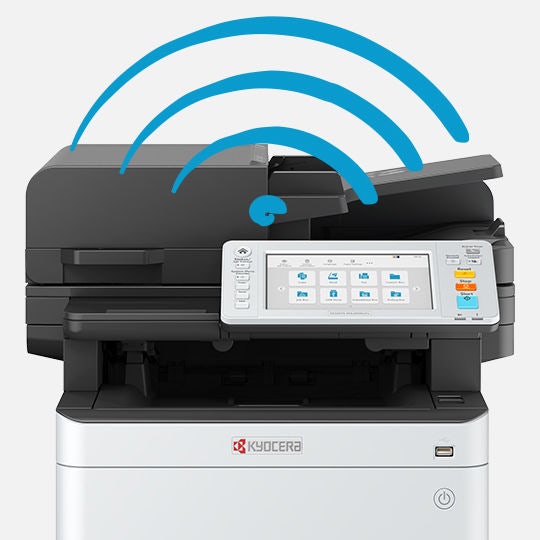
For organisations moving documents and workflows to the cloud, IT teams also need devices that integrate securely and reliably into cloud environments. Kyocera’s cloud-ready MFPs, including the TASKalfa MZ7001ci/MZ7001i Series, integrate seamlessly with Kyocera Cloud Capture (KCC) and Kyocera Cloud Print and Scan (KCPS). KCC digitises documents directly from the MFP, initiating secure cloud workflows that streamline processes and improve productivity. KCPS provides cloud-based print and scan management, reducing server costs while enhancing security and visibility.
By combining strong networking foundations with cloud-enabled devices, Kyocera helps organisations improve efficiency and advance their digital sustainability goals.
Kyocera helps organisations improve efficiency and advance their digital sustainability goals.”
Security built for modern IT environments
With cyber threats rising, IT teams are under growing pressure to protect data, users and systems across both cloud and on-premises environments. Kyocera embeds security at every layer – from network architecture to device firmware.
Kyocera’s cloud-ready MFPs, including the TASKalfa MZ7001ci/MZ7001i Series, incorporate built-in protections such as:
- End-to-end encryption for data in transit and at rest.
- User authentication to control document access.
- AI Confidential Document Guard to detect and restrict the sharing of sensitive information.
These features support compliance with strict data regulations while safeguarding cloud infrastructure and document workflows.
Smarter document workflows for connected teams
As teams work across locations and departments, managing documents can place a significant burden on IT resources. Kyocera offers cloud-connected document workflows that simplify information management, reduce manual tasks and strengthen security. With connectors to major cloud platforms, teams can securely print, scan and share documents from any location.
Maintaining on-premises print infrastructure can consume time and resources. KCPS centralises monitoring, configuration, security controls and updates, reducing the workload on IT teams.
The TASKalfa MZ7001ci/MZ7001i Series also supports predictive maintenance, alerting teams to potential issues before they cause disruption. This proactive approach lowers operational costs and improves continuity.
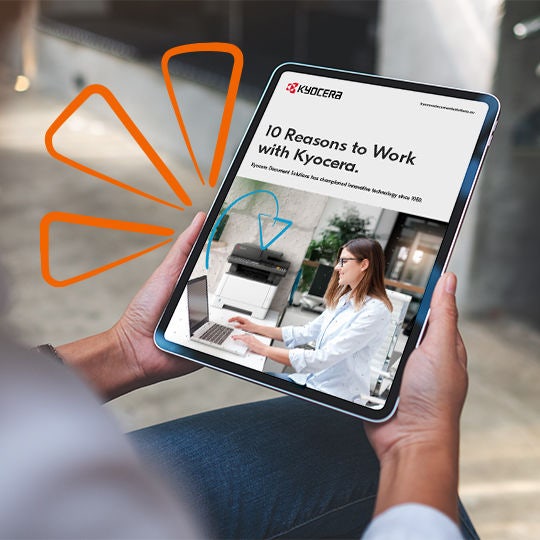
10 Reasons Why Brochure
Discover the key reasons organisations choose Kyocera, from efficient cloud-ready devices to reliable software solutions that support smarter, more secure operations.


- 10 reasons to do business with Kyocera
- Embark on your digital transformation journey
- Control your print and scan workflows from the cloud
Ready to strengthen your IT environment?
Our IT solutions are designed to support secure cloud infrastructure, smarter workflows and long-term digital sustainability. Speak to our team to find the right approach for your organisation.