
KYOCERA Document Solutions


Digital transformation continues to reshape how organisations operate, collaborate and deliver services. Businesses across industries are investing in new technologies to improve productivity and respond more quickly to change.
Yet adopting new tools alone does not guarantee success. Many organisations find that progress slows when technology, processes and workplace culture are not aligned.
Understanding digital transformation maturity can help leaders assess where their organisation stands today and identify the steps required to move forward.
What digital transformation maturity means for organisations
Digital transformation maturity refers to how effectively an organisation uses technology and data to support business performance.
Research shows that organisations with higher levels of digital maturity tend to outperform their peers. Digital leaders grow their customer base by 0.5% and revenues by 0.8% each year, while late adopters experience zero growth in their active customer base and a 1.4% decline in revenue.
For many organisations, improving maturity means introducing digital workflows that reduce manual tasks and make information easier to manage and share.
As organisations progress in their digital transformation journey, these technologies increasingly become embedded into everyday operations.
The stages of digital transformation maturity
Organisations typically progress through several stages as they strengthen their digital capabilities. Each stage builds on the previous one, helping businesses gradually integrate technology into their operations and decision-making.
Stage 1: Establish the digital foundation
The first step toward digital transformation maturity is building a solid digital foundation.
Organisations typically start by assessing their current processes and data management practices. The goal is to identify inefficiencies and determine where digital solutions can have the greatest impact.
During this stage, organisations should evaluate the key operational areas that influence their digital transformation maturity, including the following pillars:
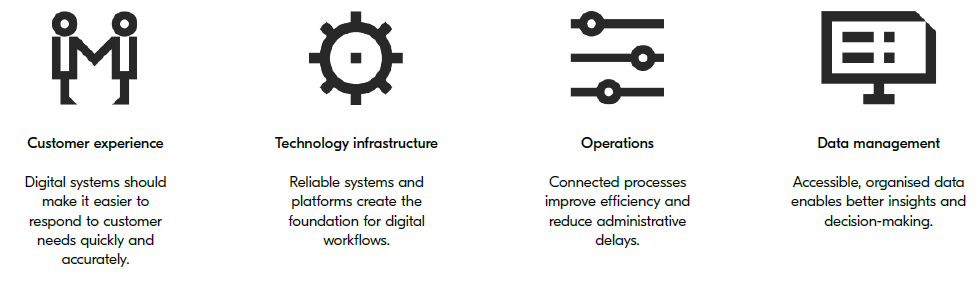
Stage 2: Explore digital workflows and cloud solutions
Once the foundation is established, organisations begin experimenting with more advanced technologies and processes.
During this stage, businesses start to connect systems and explore how cloud solutions and digital tools can improve collaboration and operational efficiency.
For example, cloud-based platforms allow employees to securely access documents and information regardless of location. This supports hybrid work environments and enables teams to collaborate more effectively.
At the same time, organisations often expand their digital workflows, replacing manual tasks such as scanning, emailing and filing with automated document routing and digital approvals.
Understanding digital transformation maturity can help leaders assess where their organisation stands today and identify the steps required to move forward."
Stage 3: Digital optimisation
In the third stage, digital technologies become embedded across the organisation’s operations.
Rather than simply adopting new tools, organisations begin using them strategically to optimise performance. Information captured through digital workflows provides valuable insights into processes, helping leaders identify inefficiencies and opportunities for improvement.
As digital workflows become more integrated, organisations can make decisions based increasingly on data rather than assumptions alone.
Stage 4: Get set to transform
The final stage represents the highest level of digital transformation maturity.
At this point, organisations are able to adapt quickly to change and continuously improve their operations using technology. Digital workflows are fully integrated across teams, and cloud-based systems support seamless collaboration.
Businesses at this stage often explore advanced technologies such as automation and artificial intelligence to enhance efficiency and create new opportunities.
Achieving this level of maturity enables organisations to respond more quickly to market changes and maintain long-term competitiveness.

Optimise your print environment for digital transformation
Cloud printing and digitised workflows help organisations reduce paper use, improve document security and streamline processes. Solutions like Kyocera Cloud Print and Scan support secure printing, cost tracking and cloud-based document workflows.
How Kyocera supports digital transformation maturity
Moving from digital ambition to digital maturity requires having the right tools.
Kyocera supports this transition through document management solutions and cloud solutions that help organisations streamline operations.
Document management and cloud solutions
For example, document management platforms such as Kyocera Cloud Information Manager (KCIM) enable businesses to capture, store and organise documents within a secure digital repository. By centralising business information, employees can retrieve files more easily and maintain version control.
Cloud-based tools like Kyocera Cloud Print and Scan (KCPS) further support this by allowing organisations to manage print and scan activities securely across locations, while improving visibility over usage and costs.
Bridging paper and digital workflows
In addition, Kyocera’s multifunction printers (MFPs) help bridge the gap between paper and digital processes. With advanced scanning capabilities, organisations can digitise paper documents and integrate them directly into digital workflows.
From digital ambition to digital maturity
Digital transformation maturity develops gradually as organisations strengthen their processes, technologies and culture.
By establishing strong foundations and improving digital workflows, organisations can create a more connected and efficient operating environment.
Kyocera supports organisations throughout this journey with document management solutions, cloud solutions and secure MFPs designed to streamline digital workflows.



- Why digital transformation matters
- Building a successful digital transformation strategy
- Getting employees engaged in digital change
We're here to help!
Our team of experts is here to answer your questions, solve your challenges and deal with your sales inquiries.