
KYOCERA Document Solutions
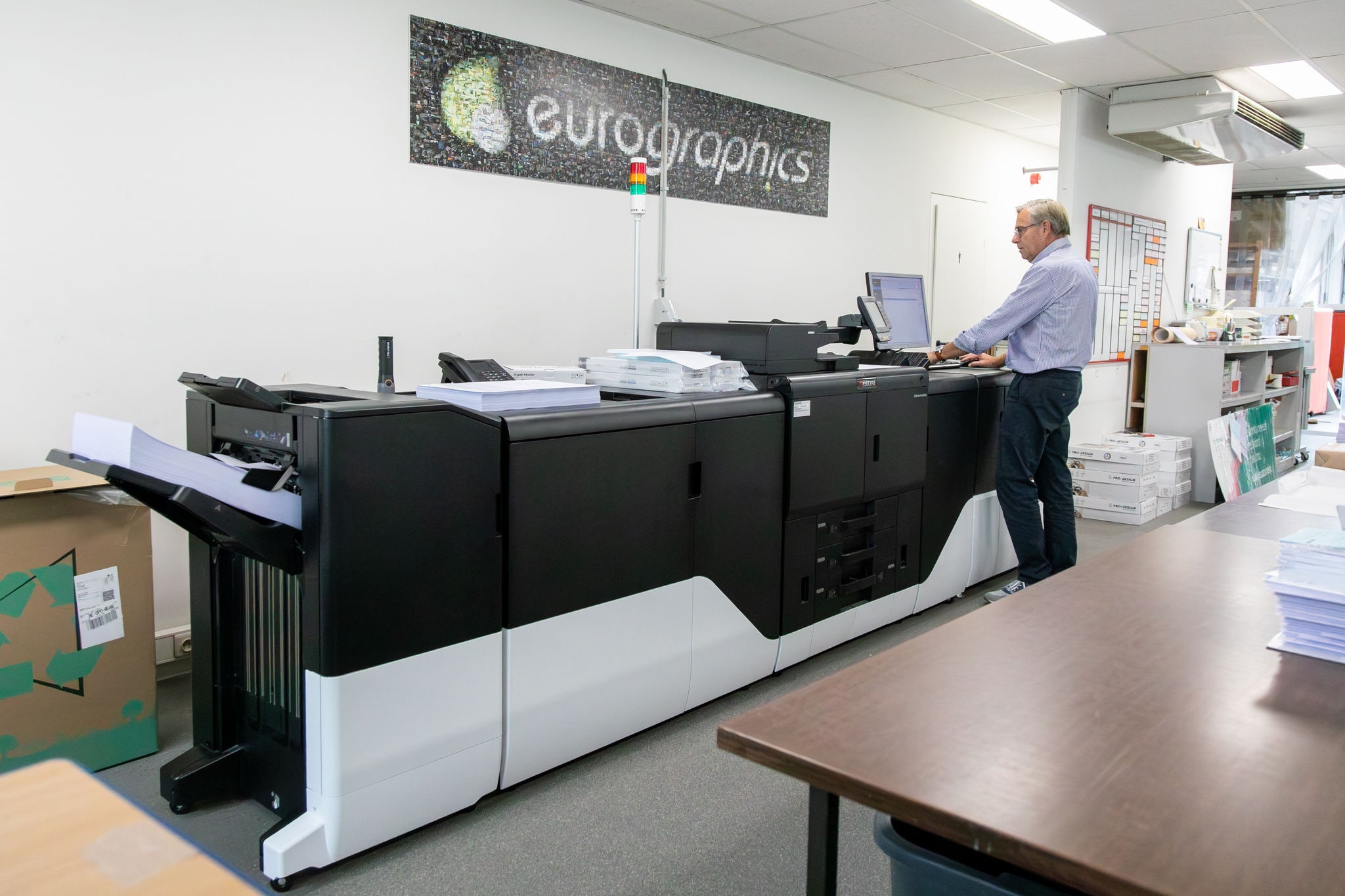


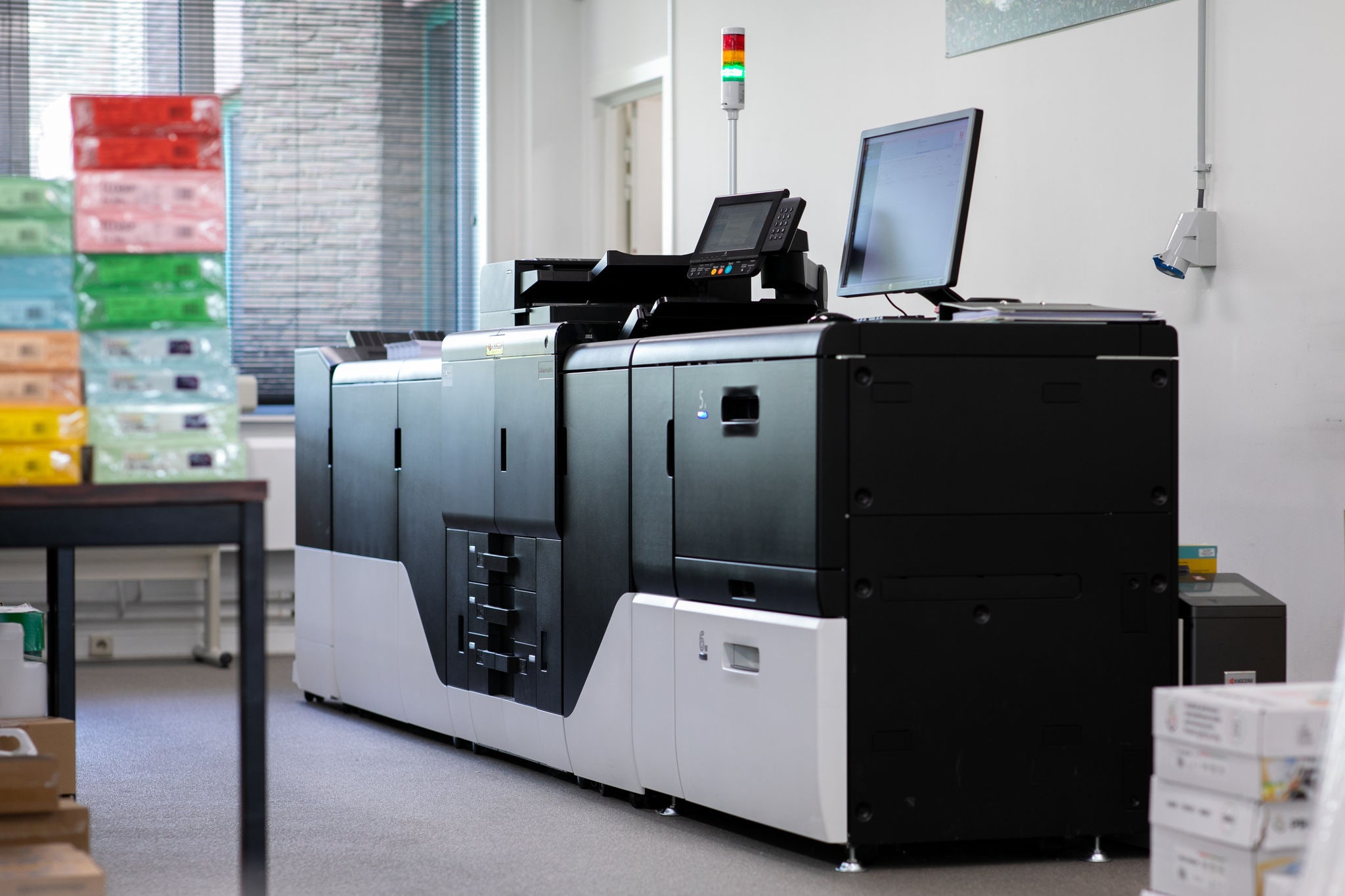
With nearly five million A4 equivalents in just over a year, the Kyocera TASKalfa Pro 15000c has secured its place in the production of Eurographics in Zaventem. Managing Director Hubert Martens deliberately chose production inkjet, alongside his toner machines, primarily for books, manuals, reference works, and other commercial print work.
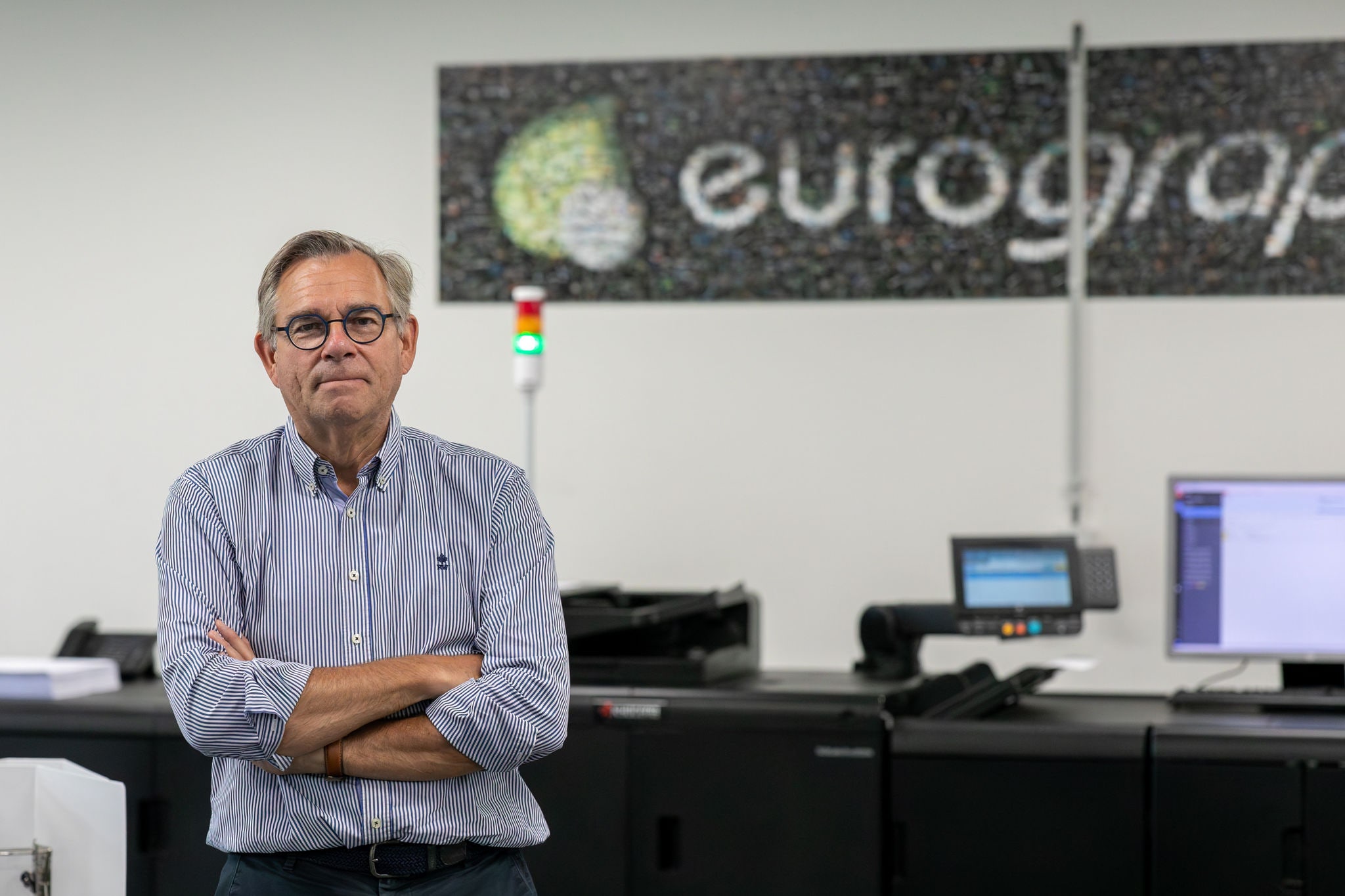
“I am glad that we have taken the step towards production inkjet,” says Hubert Martens, the owner of Eurographics.
The digital printing company Eurographics in Zaventem produces just about everything, from business cards to large-format posters and sheet material. Small format accounts for about 70 percent of the activities, while large format accounts for the remaining 30 percent. Hubert Martens (66) took over Eurographics in 2004. Previously, he worked at Océ Belgium and Plantin, among others. Today, he runs his digital print shop with five employees.
Investing in the future
After the COVID-19 years, Martens felt it was time to thoroughly renew the machinery, especially with the continuity of the company in mind. “I want the person who continues the story to take over a modern production facility. To do that, you have to keep investing.”
Inkjet was initially not at the top of his wish list. Eurographics worked primarily with toner printers for small formats, and Martens viewed production inkjet as a technology for much larger volumes. Approximately half of his small-format revenue consists of manuals, books, magazines, and similar print work. That is precisely where Kyocera’s TASKalfa Pro 15000c turned out to fit the bill. Moreover, Martens saw an opportunity to technologically distinguish himself from the competition. “Everyone does more or less the same thing. With inkjet, we could differentiate ourselves a bit more.”
Quick to produce
In practice, the transition turned out to be smaller than expected. The installation took a few days, and thanks to the familiar Fiery workflow, the team quickly mastered the machine. “After a week, we were actually already printing at full capacity,” states Martens. A year later, the entrepreneur particularly appreciates the reliability of the machine.
The print speed of 150 A4 pages per minute was a factor, but not the deciding factor. “I find operational reliability and dependability much more important than speed.” He is also struck by the limited maintenance. Eurographics starts the day with a nozzle check and can then produce without any issues. Martens experiences the advantage especially during longer runs: “That machine just keeps going.”
Eurographics works primarily for business clients from Flemish Brabant and Brussels, but associations, print retailers, and colleagues are also part of its clientele.
Inkjet and toner
In just over a year, Eurographics produced approximately 4.7 to 4.8 million A4 equivalents on the TASKalfa Pro 15000c. The company's total print volume increased by about 20 percent over the past year, although Martens emphasizes that this growth cannot be attributed solely to the new machine.
Commercially, there is still room. Eurographics has so far focused primarily on migrating existing orders. Martens sees new opportunities with schools, training centers, associations, and local history societies, involving books, manuals, reference works, and publications in small and medium-sized print runs.
Inkjet does not replace everything, however. For large areas of color and brochures on coated paper, toner retains its place at Eurographics. “You need both technologies,” Martens observes. “It is precisely the combination that gives us the freedom to choose the most suitable production method for each order.”
Martens expects inkjet to continue gaining importance in production printing, without completely displacing other technologies. He learned that lesson earlier with digital and offset. “Twenty years ago, we also thought that offset would disappear. That didn't happen. It is always a combination of both.”