
KYOCERA Document Solutions



In logistics, timing, accuracy and coordination sit at the heart of daily operations. From warehouse activity and transport planning to customs clearance and invoicing, logistics operations depend on information moving as smoothly as goods themselves.
With thousands of documents moving across multiple carriers, warehouses and regions, logistics professionals are under constant pressure to meet deadlines and remain compliant. At the same time, sensitive commercial and customer data must be protected across systems and locations.
To meet these demands, teams need logistics technology and logistics software that simplify document workflows instead of adding complexity.
With Kyocera, you get the full package. Our solutions span reliable printing hardware, integrated software solutions and secure document management to help logistics teams operate with confidence, control and consistency.
Strengthening control and reliability in logistics operations
Logistics remains heavily dependent on documentation. Consignment notes, delivery orders, packing lists, contracts, invoices and customs documents still sit at the centre of daily logistics operations.
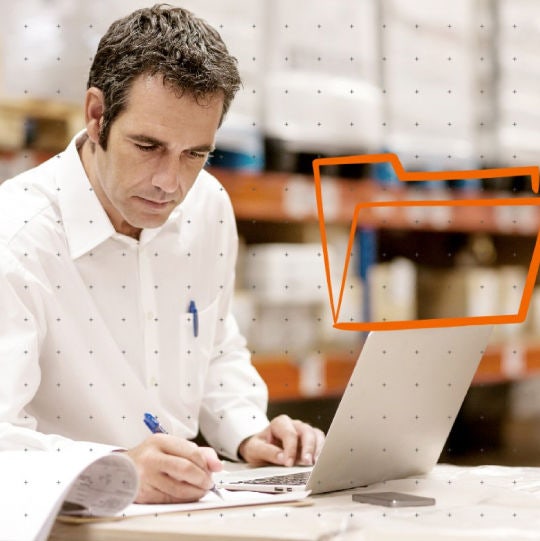
In many organisations, teams continue to manually re-enter data from delivery notes and search for documents across email, shared folders and paper archives.
This creates real operational risk. A single incorrect reference number, a missing customs document or a delayed proof of delivery can interrupt billing, delay shipments or trigger compliance issues.
According to research from McKinsey, trade document processing, like the bill of lading, can account for between 10% and 30% of total transportation costs, reflecting the delays embedded in paper and manual workflows.
This is where logistics software and connected document workflows become a critical foundation for resilient logistics operations.
Keeping logistics workflows moving with reliable devices
- A3 lineup: Kyocera’s TASKalfa and ECOSYS A3 range of multifunctional printers (MFPs) support document-heavy logistics operations such as shipping documentation, customs paperwork, invoicing and compliance records. Designed for high usage, these devices deliver consistent output, secure access and long-term reliability.
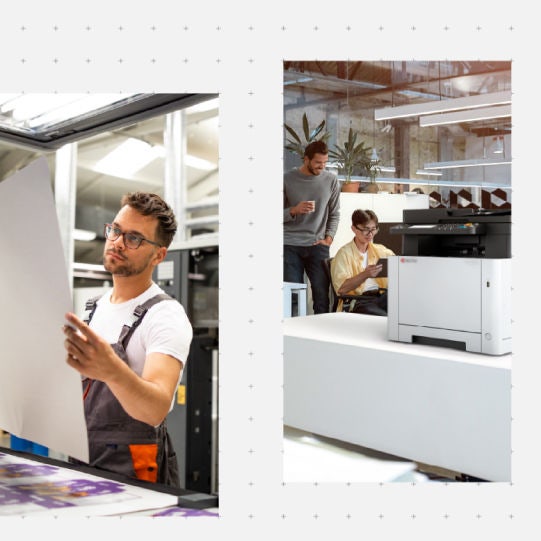
- A4 lineup: With more than 20 A4 MFPs, Kyocera offers one of the most complete lineups in the industry – all designed and manufactured in-house to ensure consistent quality and long-term reliability. Compact and efficient, these devices support everyday logistics operations with print, scan and copy functionality, alongside user authentication and encrypted workflows to protect sensitive information.
Connecting logistics documents with intelligent software solutions
Digital tools are transforming how documentation is managed and shared. Processes that were once manual and error-prone can now be automated and optimised using integrated logistics software.
Kyocera’s software solutions work alongside our reliable printing hardware to support the entire logistics document lifecycle, helping teams reduce manual handling.
Core logistics software capabilities include:
- Document capture: digitise logistics paperwork from a Kyocera MFP, using scan workflows and optical character recognition (OCR) to reduce manual re-entry and improve data accuracy.
- Cloud connectivity: print, scan and access logistics documents securely from any location, with direct connectivity to leading cloud platforms.
- Secure scalability: built-in access controls and user management support expanding logistics operations without adding system complexity.
By simplifying how documents move through logistics operations, Kyocera helps teams improve visibility, reduce delays and keep shipments moving.
By simplifying how documents move through logistics operations, Kyocera helps teams improve visibility, reduce delays and keep shipments moving.”
Protecting sensitive information at every stage
Logistics teams manage commercially sensitive information across multiple partners and locations. From customer records and contracts to customs and compliance documentation, protecting information is essential for trust and keeping up with regulations.
Kyocera embeds security across logistics technology to safeguard information throughout the document lifecycle:
- Multi-layer protection: secure boot, firmware integrity checks and controlled updates protect devices from unauthorised tampering.
- Encrypted data handling: documents are protected through encryption during transmission and storage, supporting secure printing and scanning workflows.
- Access control and monitoring: role-based access, authentication and activity logging help logistics teams maintain oversight across devices.
Supporting sustainability in logistics
Logistics operations face increasing pressure to improve environmental performance while controlling operational costs.
With this in mind, sustainable device design and digital workflows play an important role in modern logistics technology strategies.
Kyocera supports this through:
- Long-life components that reduce replacement cycles and service interruptions.
- Energy-efficient operation that lowers electricity consumption in high-use environments.
- Reduced paper dependency by enabling secure digital workflows and cloud-connected document processes.
These measures help teams maintain predictable operating costs while supporting sustainability objectives.
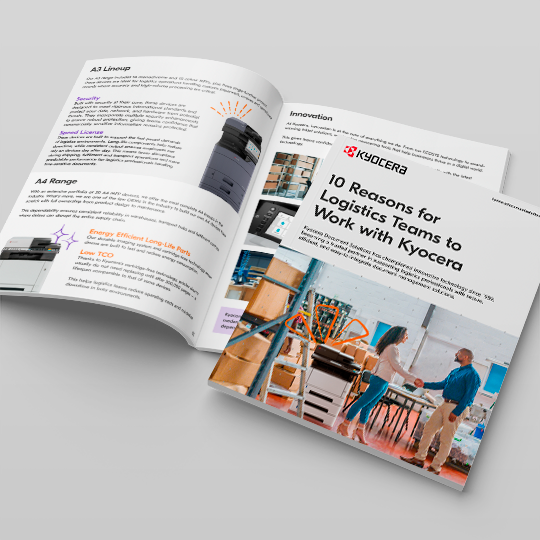
10 Reasons Why Logistics Teams Choose Kyocera
Our brochure explores the key reasons logistics organisations choose Kyocera, from secure logistics software and connected document workflows to reliable printing hardware designed for demanding operational environments.
Keeping logistics operations moving with Kyocera
Logistics teams operate in environments where delays and missing information quickly ripple through the entire supply chain.
Kyocera supports logistics operations by bringing devices, software solutions and security into one connected document management ecosystem.
This partnership supports more resilient logistics operations as volumes, partners and regulatory demands continue to grow.

- Solve all your document challenges
- Optimise your logistics operations
- Grow your business with trusted expertise
Our team is here to help!
Talk to our experts about improving your logistics operations with secure software solutions and reliable printing hardware tailored to your environment.